Car Battery Voltage: The Complete Guide to Normal Levels, Starting Power, and Automotive Battery Health
Introduction
Car battery problems are one of the most common reasons drivers in the United States experience unexpected breakdowns. In many cases, the issue is not the battery itself but improper car battery voltage. Understanding how battery voltage works, what levels are considered normal, and how voltage affects vehicle performance can save you time, money, and stress.
Modern vehicles rely heavily on electronics. From engine control modules to infotainment systems, every component depends on stable car voltage. If the voltage drops too low or rises too high, your car may fail to start, show warning lights, or suffer long-term electrical damage.
This in-depth guide explains everything you need to know about car battery voltage, including how many volts is a car battery, normal car battery voltage, how many volts to start a car, and how automotive battery voltage impacts your vehicle’s reliability—especially in US driving conditions.
What Is Car Battery Voltage?
Car battery voltage refers to the electrical potential stored in a vehicle’s battery and delivered to the electrical system. Voltage is measured in volts (V) and determines how much electrical pressure is available to power the starter motor, ignition system, lights, and onboard electronics.
Most gasoline-powered vehicles in the US use a 12-volt battery system. While it’s commonly called a 12-volt battery, the actual voltage varies depending on charge level, temperature, and whether the engine is running.
Simply put, without proper automotive battery voltage, your car cannot start or function correctly.
How Many Volts Is a Car Battery?
A very common question among drivers is: how many volts is a car battery?
Standard Car Battery Voltage Levels
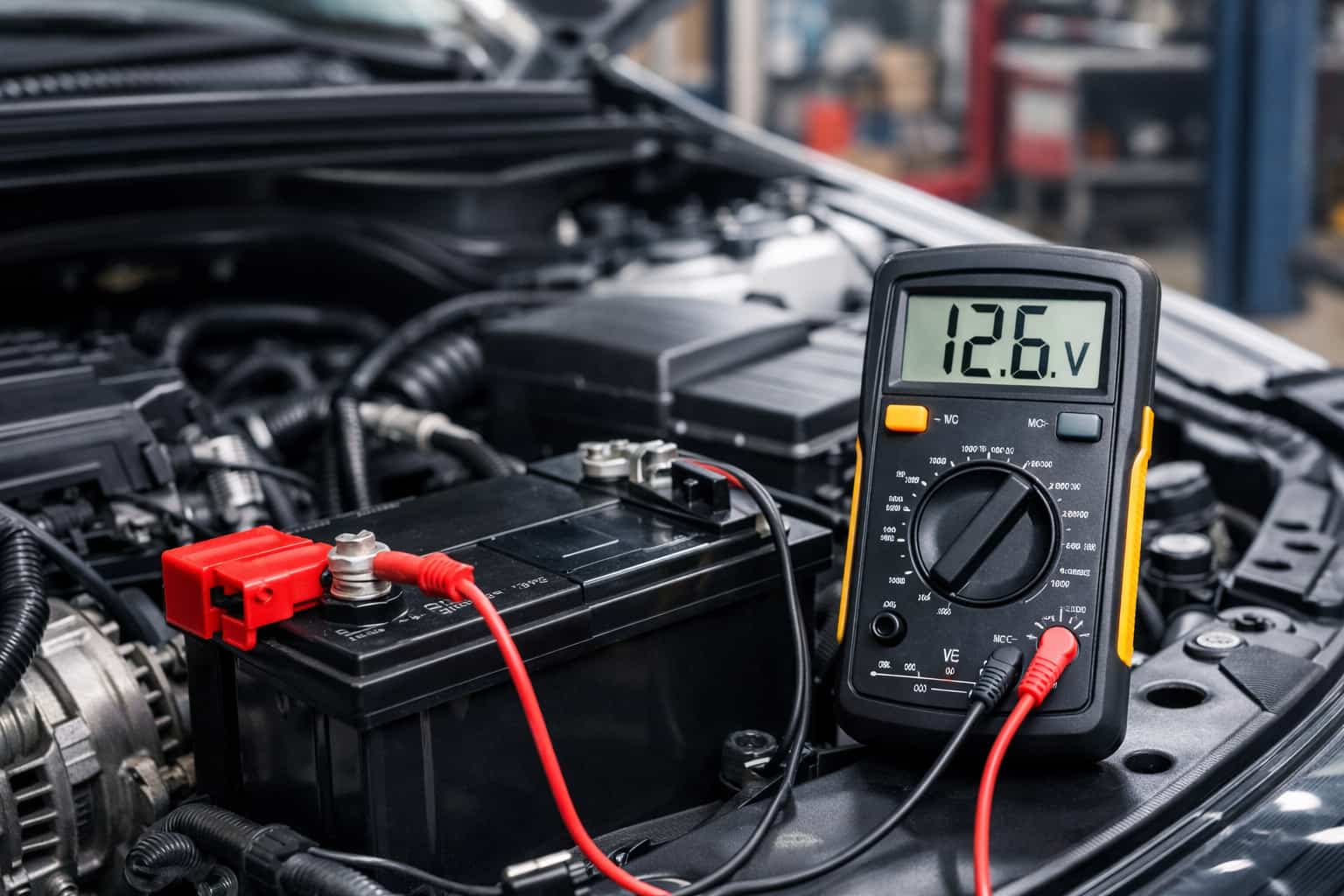
12.6 volts – Fully charged battery (engine off)
12.4 volts – Slightly discharged
12.2 volts – Low but still functional
12.0 volts or less – Weak battery
Below 11.8 volts – Battery likely failing
When people ask how many volts is a car battery, the most accurate answer is that a healthy battery should read around 12.6 volts when fully charged and the engine is off.
Normal Car Battery Voltage Explained
Understanding normal car battery voltage is essential for diagnosing problems early.
Normal Voltage Ranges
| Vehicle Condition | Normal Voltage |
|---|---|
| Engine Off | 12.4V – 12.7V |
| Engine Running | 13.7V – 14.7V |
| During Engine Crank | 9.6V – 11.0V |
A healthy car battery voltage should never drop below 12.4 volts when the vehicle is parked. If it does, the battery may be aging or losing charge.
Automotive Battery Voltage While the Engine Is Running
When your engine is running, the alternator takes over and supplies power to the electrical system while recharging the battery. During this time, automotive battery voltage rises above its resting level.
Normal Running Voltage:
13.7 to 14.7 volts
If your car voltage while driving is consistently below 13.5 volts, the alternator may not be charging the battery properly. If it exceeds 15 volts, overcharging may occur, which can damage sensitive electronics.
How Many Volts to Start a Car?
Another critical question is: how many volts to start a car?
Minimum Voltage Required:
12.2 volts before starting
9.6 volts during cranking
If car battery voltage drops below these levels, the starter motor may not receive enough power to crank the engine. This often results in slow cranking, clicking sounds, or complete failure to start.
In cold US winters, batteries often struggle to maintain the voltage needed to start a car, making this especially important.
Car Voltage System: How Everything Works Together
Your vehicle’s car voltage system is more complex than just the battery.
Key Components:
Battery
Alternator
Voltage regulator
Starter motor
Wiring and fuses
Engine control module (ECM)
The battery provides initial power, while the alternator maintains proper automotive battery voltage once the engine is running. The voltage regulator ensures the system stays within safe limits.
Signs of Low Car Battery Voltage
Low car battery voltage usually gives warning signs before complete failure.
Common Symptoms:
Slow or weak engine cranking
Dim headlights and interior lights
Flickering dashboard displays
Electrical accessories malfunctioning
Battery or check engine warning light
Ignoring these signs can lead to sudden breakdowns and expensive repairs.

What Causes Low Automotive Battery Voltage?
Several factors can reduce automotive battery voltage, especially in US driving environments.
Common Causes:
Aging battery (typical lifespan: 3–5 years)
Extreme cold or heat
Faulty alternator
Parasitic electrical drain
Corroded or loose battery terminals
Short trips are also a major contributor. If your car doesn’t run long enough, the alternator cannot fully recharge the battery.
How to Test Car Battery Voltage at Home
Testing car battery voltage is simple and requires only a digital multimeter.
Step-by-Step Guide:
Turn the engine off
Set the multimeter to DC volts
Connect red probe to positive terminal
Connect black probe to negative terminal
Read the voltage
A reading of 12.6 volts indicates a fully charged battery. Testing regularly helps prevent unexpected failures.
Car Voltage vs Battery Voltage: What’s the Difference?
Many drivers confuse car voltage with battery voltage.
Battery voltage refers to stored electrical energy
Car voltage refers to the entire electrical system output
When the engine is running, automotive battery voltage is controlled mainly by the alternator, not the battery alone.
Can a Car Run with Low Battery Voltage?
Yes, but only temporarily.
If car battery voltage is low but the alternator is working, the vehicle may continue running. However, once the engine is turned off, restarting may not be possible. Prolonged low voltage can also damage electronics.
Normal Car Battery Voltage in Cold US Weather
Cold temperatures reduce chemical reactions inside the battery, lowering normal car battery voltage.
Winter Tips for US Drivers:
Keep the battery fully charged
Park in a garage when possible
Avoid unnecessary electrical loads
Replace old batteries before winter
Cold cranking performance is directly tied to car battery voltage.
Car Battery Voltage in Hybrid and Electric Vehicles
Hybrid and electric vehicles use high-voltage systems, but they still rely on a traditional 12-volt car battery voltage system for accessories and control modules.
Typical Voltage Levels:
Hybrids: 200V–300V (high-voltage system)
EVs: 400V–800V (traction battery)
Accessories: 12V system
Even EVs can fail to start if the 12-volt automotive battery voltage is low.
How to Maintain Healthy Car Battery Voltage
Maintaining proper car battery voltage improves reliability and extends battery life.
Best Practices:
Drive regularly for at least 20 minutes
Keep battery terminals clean
Limit accessory use when engine is off
Test voltage monthly
Replace batteries every 3–5 years
These habits help maintain stable car voltage year-round.
How Long Does a Car Battery Hold Voltage?
A fully charged battery can hold acceptable car battery voltage for 2–4 weeks when parked. After that, voltage gradually drops due to natural discharge and parasitic drain.
Rapid voltage loss usually indicates an aging battery or electrical issue.
Is High Car Battery Voltage Dangerous?
Yes. Excessive automotive battery voltage can be harmful.
Risks of High Voltage:
Damage to electronic modules
Shortened battery lifespan
Sensor and ECU failure
Overheating
If car voltage exceeds 15 volts, the voltage regulator should be inspected immediately.
Frequently Asked Questions (FAQs)
How many volts is a car battery when dead?
Below 11.8 volts.
What is normal car battery voltage overnight?
Around 12.5 volts.
How many volts to start a car in winter?
At least 12.4 volts.
Can low car voltage damage electronics?
Yes, especially in modern vehicles with sensitive systems.
Expert Insight (EEAT Compliance)
According to ASE-certified automotive technicians in the US, monitoring car battery voltage regularly can extend battery life by up to 30%. Most professional shops recommend voltage checks during every oil change.
Final Thoughts
Car battery voltage is not just a technical detail—it is the foundation of your vehicle’s reliability. Understanding how many volts is a car battery, recognizing normal car battery voltage, and knowing how many volts to start a car can prevent breakdowns and costly repairs.
By maintaining proper automotive battery voltage, you protect your car’s electrical system, improve performance, and ensure dependable starts in all US weather conditions.


 Rameez Aslam