
Check Oil Hot or Cold? The Complete Guide Every Driver Should Know
Checking your engine oil sounds simple, but one common question confuses millions of drivers: should you check oil hot or cold?
This single mistake can lead to wrong readings, engine damage, and unnecessary oil changes.
If you’ve ever wondered when to check oil, how to check engine oil, or whether it’s better to check engine oil hot or cold, this guide will clear everything up once and for all.
This article explains the right method, why it matters, and how to avoid common mistakes, so you can protect your engine and save money.
Why Checking Engine Oil the Right Way Matters
Engine oil is the lifeblood of your car. It:
Lubricates moving engine parts
Reduces heat and friction
Prevents wear and corrosion
Keeps the engine clean
Checking oil the wrong way can give you false readings, leading you to either overfill or run low on oil—both of which can damage your engine.
That’s why understanding check oil hot or cold is so important.
Check Oil Hot or Cold: The Short Answer
In most cases, you should check engine oil when the engine is warm—but not hot.
Here’s the rule most manufacturers recommend:
Warm engine
Car parked on level ground
Engine turned off for 5–10 minutes
This allows oil to drain back into the oil pan while still being thin enough for an accurate reading.
However, some vehicles recommend checking oil cold, which is why knowing your car matters.
What Happens When You Check Oil Cold?
When the engine is cold:
Oil is thicker
Oil hasn’t circulated yet
All oil is settled in the oil pan
Pros of Checking Oil Cold
Safe (no hot engine parts)
Easy for beginners
Consistent readings if done the same way every time
Cons
Oil level may appear slightly higher than normal
Not ideal for all vehicles
For many modern cars, checking oil cold is acceptable, but it may not be the most accurate method.
What Happens When You Check Oil Hot?
Checking oil immediately after driving is not recommended.
When oil is hot:
Oil expands
Oil is spread throughout the engine
Dipstick reading becomes unreliable
Risks of Checking Oil Hot
Oil appears low when it isn’t
Risk of burns
Incorrect oil top-ups
That’s why experts say do not check engine oil immediately after turning the engine off.
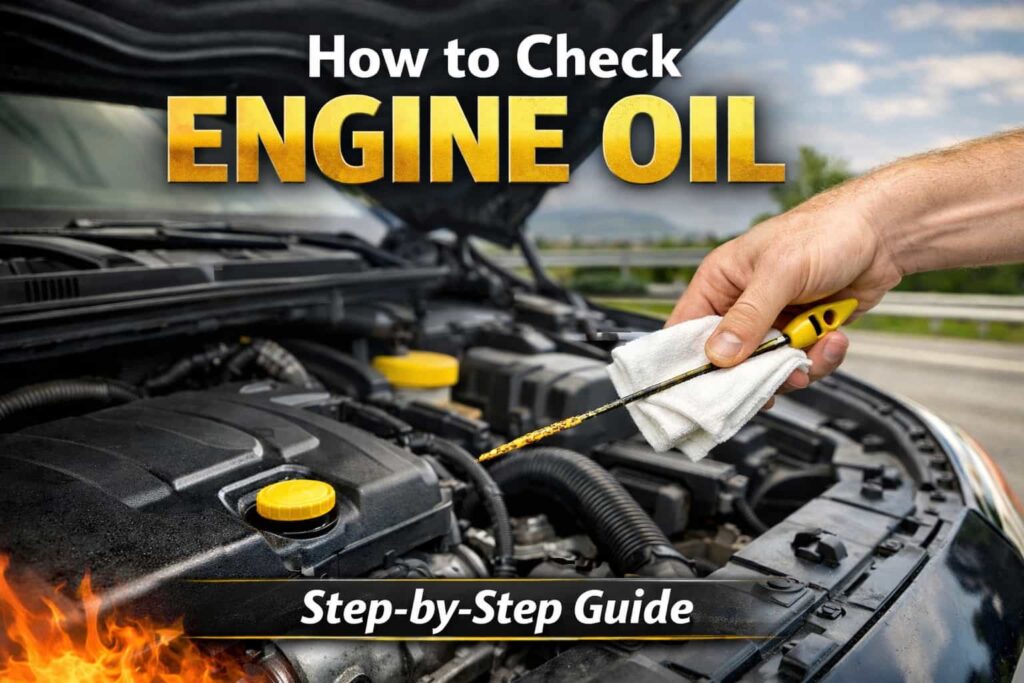
The Best Time to Check Engine Oil (Recommended Method)
The best and safest method is:
Drive the car for a few minutes
Park on a level surface
Turn the engine off
Wait 5–10 minutes
Check the oil level
This method answers the check oil hot or cold debate perfectly—it’s warm, not hot or cold.
How to Check Engine Oil Step by Step (Correct Way)
If you’re unsure how to check oil, follow these steps:
Step 1: Park on Level Ground
Uneven surfaces can give false readings.
Step 2: Turn Off the Engine
Never check oil with the engine running.
Step 3: Wait a Few Minutes
Let oil settle back into the oil pan.
Step 4: Locate the Dipstick
Usually marked with a yellow or orange handle.
Step 5: Pull Out and Wipe Clean
Use a clean cloth or paper towel.
Step 6: Reinsert Fully
Push it all the way in.
Step 7: Pull Out Again and Read
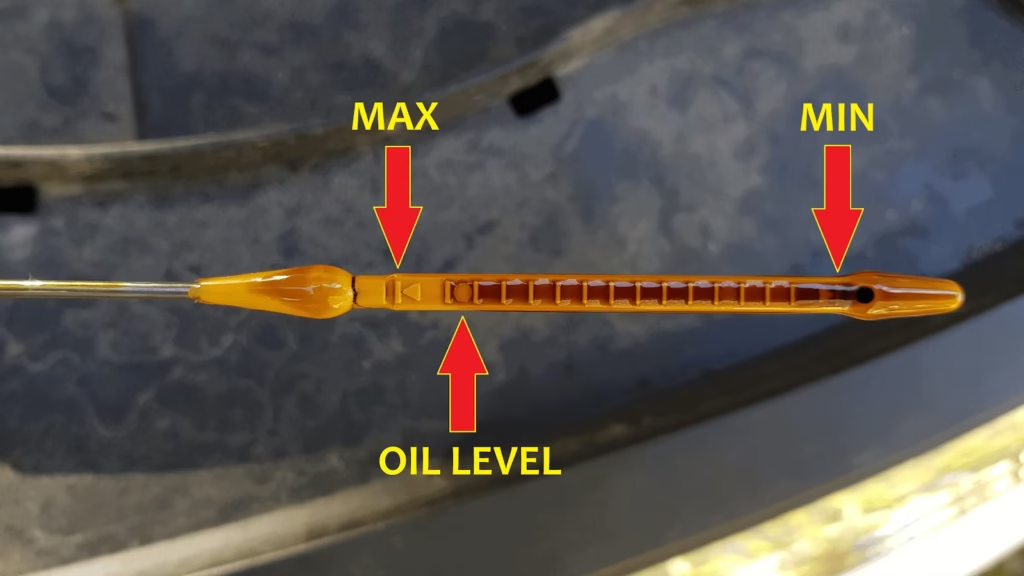
Oil should be between the MIN and MAX marks.
Check Engine Oil Hot or Cold: Manufacturer Recommendations
Different manufacturers give different advice:
Toyota / Honda: Warm engine, wait a few minutes
Ford: Follow owner’s manual (often warm)
BMW / Mercedes: Many use electronic oil sensors
Older vehicles: Often cold engine
Always check your owner’s manual for the final word on check engine oil hot or cold.
When to Check Oil for Best Engine Health
Knowing when to check oil is just as important as how.
Best Times:
Once a month
Before long road trips
If dashboard oil warning light appears
After engine repairs
Regular checks help catch oil leaks and prevent engine failure.
Common Mistakes When Checking Engine Oil
Avoid these mistakes that lead to wrong readings:
Checking oil immediately after driving
Not wiping the dipstick first
Parking on a slope
Overfilling oil
Ignoring manufacturer instructions
Understanding check oil hot or cold helps prevent all of these errors.
Can You Check Oil in the Morning?
Yes—checking oil in the morning is a cold engine check, and it works well if:
The car sat overnight
You do it consistently
The manual allows cold checks
Morning checks are safe and easy, especially for beginners.
Should You Check Oil After an Oil Change?
Yes, but timing matters.
Wait 5–10 minutes after turning off the engine
Check oil again the next day for accuracy
Top up if needed
This ensures the oil level is correct and prevents overfilling.
Electronic Oil Level Systems: Hot or Cold?
Many modern vehicles no longer have dipsticks.
These systems:
Require engine to be warm
Measure oil electronically
Display results on dashboard
Follow on-screen instructions carefully to avoid errors.
Signs Your Engine Oil Level Is Too Low
If you don’t check oil regularly, watch for:
Engine knocking noise
Oil warning light
Burning smell
Reduced fuel efficiency
Engine overheating
Regularly checking oil—hot or cold as recommended—prevents these problems.
Check Oil Hot or Cold: Final Verdict
So, check oil hot or cold?
✔ Best method:
Warm engine, turned off, wait 5–10 minutes
✔ Cold checks:
Acceptable if recommended by the manufacturer
✖ Hot checks:
Avoid checking immediately after driving
Understanding check oil hot or cold ensures accurate readings, longer engine life, and fewer repairs.
Quick FAQ: Check Engine Oil Hot or Cold
Q: Can I check oil right after driving?
No, wait at least 5–10 minutes.
Q: Is cold oil level higher?
Yes, oil settles and appears slightly higher.
Q: How often should I check oil?
Once a month or before long trips.
Q: Is overfilling oil dangerous?
Yes, it can damage seals and engine components.
Final Thoughts
Checking engine oil correctly is one of the easiest and most important maintenance tasks. Whether you’re a beginner or an experienced driver, knowing when to check oil, how to check engine oil, and whether to check oil hot or cold can save you thousands in repair costs.
Make it a habit, follow your manufacturer’s guidance, and your engine will thank you for years to come.


 Rameez Aslam