Car Battery Voltage Chart: A Complete Guide to Normal Car Battery Voltage
A car battery may look simple from the outside, but it plays a critical role in powering your vehicle. Understanding battery voltage is one of the easiest ways to diagnose battery health, prevent breakdowns, and extend battery life. This is where a car battery voltage chart becomes extremely useful.
In this detailed guide, you will learn everything about car battery voltage, including normal readings, what different voltage levels mean, how to test battery voltage correctly, and when it’s time to replace your battery. Whether you are a daily driver, DIY car owner, or automotive enthusiast, this guide will help you make smarter decisions.
What Is Car Battery Voltage?
Car battery voltage refers to the electrical potential stored in your vehicle’s battery. Most modern cars use a 12-volt lead-acid battery, which supplies power to start the engine and run electrical components like headlights, infotainment systems, sensors, and onboard computers.
A healthy battery does not always show exactly 12 volts. The actual voltage changes depending on whether the engine is off, running, or under load. That’s why a car battery voltage chart is important—it helps you interpret those readings correctly.
Why a Car Battery Voltage Chart Is Important
A car battery voltage chart gives you a clear reference to determine whether your battery is healthy, weak, or failing. Instead of guessing, you can compare your battery’s voltage reading with standard values.
Key benefits of using a car battery voltage chart include:
Early detection of battery problems
Preventing sudden breakdowns
Saving money by avoiding unnecessary replacements
Understanding charging system performance
Improving vehicle reliability
Many battery issues start small, and voltage readings often reveal the problem long before your car fails to start.
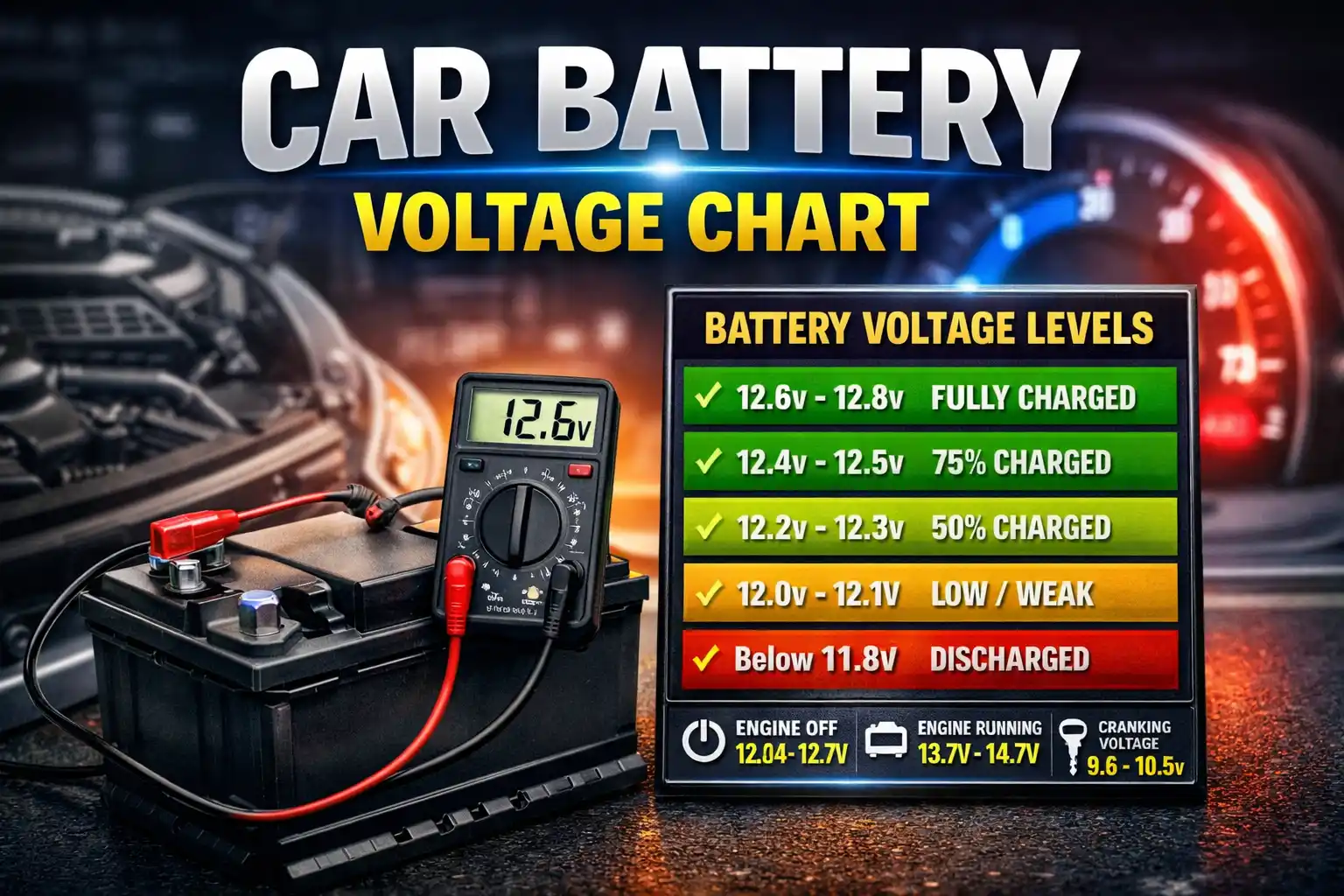
Standard Car Battery Voltage Chart (12V Battery)
Below is a general car battery voltage chart for a typical 12-volt car battery when the engine is off:
| Battery Voltage | Battery Condition |
|---|---|
| 12.6 – 12.8 V | Fully charged |
| 12.4 – 12.5 V | 75% charged |
| 12.2 – 12.3 V | 50% charged |
| 12.0 – 12.1 V | 25% charged |
| Below 11.9 V | Discharged / weak |
| Below 11.5 V | Likely failing |
This car battery voltage chart is your baseline for understanding battery health at rest.
Normal Car Battery Voltage Explained
Normal Voltage When the Engine Is Off
The normal car battery voltage when the engine is off ranges between 12.4 and 12.7 volts. Anything below this range indicates a partially discharged or weak battery.
Normal Voltage When the Engine Is Running
When the engine is running, the alternator charges the battery. At this point, car battery voltage should increase to:
13.7 – 14.7 volts
If the voltage is too low or too high while running, it may indicate a charging system issue.
Car Battery Voltage Chart: Engine Off vs Engine Running
Understanding the difference between engine states is critical.
| Condition | Normal Voltage Range |
|---|---|
| Engine off | 12.4 – 12.7 V |
| Engine running | 13.7 – 14.7 V |
| Cranking | 9.6 – 10.5 V |
A proper car battery voltage chart always considers these conditions to avoid misdiagnosis.
How to Read a Car Battery Voltage Chart Correctly
Many people panic when they see a voltage number without context. Here’s how to read a car battery voltage chart the right way:
Turn off the engine and wait 30 minutes
Measure voltage using a digital multimeter
Compare the reading with the chart
Check voltage again while the engine is running
Observe voltage drops during engine start
Using this method ensures accurate readings.
How to Test Car Battery Voltage at Home
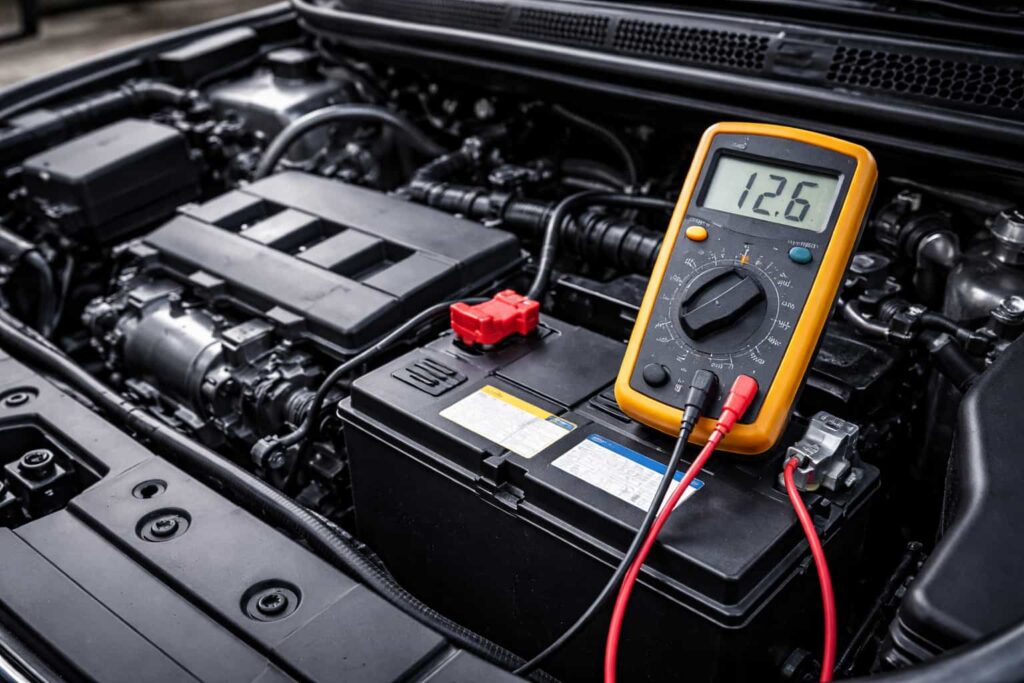
Testing car battery voltage is simple and requires minimal tools.
Tools Needed
Digital multimeter
Safety gloves
Clean battery terminals
Step-by-Step Process
Set the multimeter to DC volts
Connect red probe to positive terminal
Connect black probe to negative terminal
Read the voltage on the screen
Compare results with the car battery voltage chart
This process takes less than five minutes and can save you from unexpected car trouble.
Car Battery Voltage While Starting the Engine
During engine cranking, voltage temporarily drops. This is normal. However, if voltage drops too low, the battery may be weak.
Normal cranking voltage: 9.6 – 10.5 volts
Below 9.5 volts: Battery may struggle to start the car
A quality car battery voltage chart includes cranking values for accurate analysis.
What Low Car Battery Voltage Means
Low car battery voltage can point to several issues:
Battery aging
Corroded terminals
Parasitic drain
Faulty alternator
Extreme weather conditions
If voltage consistently reads below 12.2 volts, your battery is likely losing capacity.
What High Car Battery Voltage Means
High voltage is less common but can be just as dangerous.
Over 14.8 volts while running may indicate a faulty voltage regulator
Excessive voltage can damage electronics
Battery overheating may occur
Your car battery voltage chart helps identify abnormal high readings early.
Normal Car Battery Voltage by Battery Type
Lead-Acid Batteries
Fully charged: 12.6 – 12.8 V
Common in most vehicles
AGM Batteries
Fully charged: 12.8 – 13.0 V
Used in start-stop vehicles
Lithium Car Batteries
Higher resting voltage
Requires specialized voltage charts
Always use the correct car battery voltage chart for your battery type.
Car Voltage vs Car Battery Voltage
Many people confuse car voltage with car battery voltage, but they are not exactly the same.
Car battery voltage: Battery condition
Car voltage: Entire electrical system
When the engine is running, car voltage reflects alternator output, not just the battery.
How Weather Affects Car Battery Voltage
Temperature has a major impact on car battery voltage.
Cold Weather
Voltage drops faster
Cranking power decreases
Hot Weather
Battery fluid evaporates
Shortens battery lifespan
A car battery voltage chart should always be interpreted with weather conditions in mind.
How Long Does a Car Battery Hold Proper Voltage?
On average, car batteries last 3 to 5 years. Over time, the ability to hold voltage decreases even if the battery still starts the car.
Signs your battery is aging:
Voltage drops overnight
Slow engine start
Frequent jump-starts
Monitoring voltage regularly helps extend battery life.
Car Battery Voltage Chart for Troubleshooting
Here’s how to use a car battery voltage chart for diagnosis:
12.6 V but car won’t start: Starter or wiring issue
Below 12 V overnight: Parasitic drain
Over 15 V running: Alternator regulator failure
Voltage fluctuates: Loose connections
This makes voltage charts extremely valuable for DIY troubleshooting.
Common Myths About Car Battery Voltage
Myth 1: 12 volts means fully charged
Reality: A fully charged battery is closer to 12.6–12.8 volts.
Myth 2: New batteries always show perfect voltage
Reality: New batteries can still be undercharged.
Myth 3: Voltage alone tells everything
Reality: Load testing and charging tests also matter.
How Often Should You Check Car Battery Voltage?
Experts recommend checking car battery voltage:
Every 3 months
Before long road trips
Before winter and summer
If the car sits unused
Regular checks prevent surprise failures.
When to Replace a Battery Based on Voltage
You should consider replacement if:
Voltage stays below 12.0 volts after charging
Voltage drops below 9.5 volts during cranking
Battery is over 4 years old with weak readings
Your car battery voltage chart gives you clear replacement signals.
Frequently Asked Questions
What is normal car battery voltage?
Normal car battery voltage is 12.4–12.7 volts when the engine is off.
Can a car run with low battery voltage?
Yes, but low voltage can damage electronics and cause starting issues.
Does idling charge the battery fully?
Idling charges slowly; driving at highway speed is more effective.
Is 11.8 volts bad for a car battery?
Yes, 11.8 volts indicates a discharged or failing battery.
Final Thoughts
A car battery voltage chart is one of the most powerful yet simple tools for maintaining your vehicle. By understanding normal car battery voltage, tracking changes over time, and testing regularly, you can avoid breakdowns, protect your electrical system, and extend battery life.
Whether you’re diagnosing a problem or performing routine maintenance, knowing how to read car battery voltage puts you in control of your vehicle’s health.


 Rameez Aslam