Car Voltage: Complete Guide to Car Battery Voltage, Normal Levels, and Starting Power
Introduction: Why Car Voltage Is Critical for Every Vehicle Owner
Car problems often appear without warning—your vehicle refuses to start, dashboard lights flicker, or electronics behave unpredictably. In many cases, the root cause is a simple but essential factor: car voltage.
Understanding car voltage helps you:
Prevent unexpected breakdowns
Extend battery and alternator life
Avoid costly electrical repairs
Keep your vehicle reliable in all weather conditions
This comprehensive guide explains everything you need to know about car voltage, including car battery voltage, normal automotive battery voltage, and how many volts are required to start a car. This article is written specifically for US drivers and follows modern automotive best practices.
What Is Car Voltage?
Car voltage refers to the electrical power supplied by your vehicle’s battery and charging system to operate the engine and all electrical components.
Most passenger vehicles in the United States use a 12-volt electrical system, which powers:
Engine starting system
Headlights and interior lights
Infotainment and navigation systems
Sensors, computers, and safety systems
Without proper car voltage, even a well-maintained engine cannot operate.
How Many Volts Is a Car Battery?
One of the most common questions drivers ask is: How many volts is a car battery?
A standard car battery is rated at 12 volts, but the actual voltage varies depending on its condition.
Typical Car Battery Voltage Levels (Engine Off)
| Battery Condition | Voltage Reading |
|---|---|
| Fully charged | 12.6 – 12.8 volts |
| Healthy | 12.4 – 12.6 volts |
| Weak | 12.0 – 12.3 volts |
| Dead | Below 12.0 volts |
A healthy car battery voltage should remain above 12.4 volts when the engine is off.
Normal Car Battery Voltage Explained
What Is Normal Car Battery Voltage?
Normal car battery voltage depends on whether the engine is running or turned off.
Engine Off
12.4 to 12.8 volts
This indicates a fully charged and healthy battery.
Engine Running
13.7 to 14.7 volts
This higher voltage comes from the alternator charging the battery.
If voltage exceeds 15 volts, it may indicate an overcharging problem that can damage electronics.
Automotive Battery Voltage While Driving
When your vehicle is running, the alternator takes over power generation. Proper automotive battery voltage while driving ensures:
Battery stays charged
Electrical systems remain stable
Sensors and computers function correctly
Low voltage while driving often points to alternator or belt issues.

How Many Volts to Start a Car?
How many volts to start a car successfully?
To start a vehicle reliably, the battery must supply at least 12.2 volts.
| Voltage Level | Starting Result |
|---|---|
| 12.6V | Instant start |
| 12.4V | Normal start |
| 12.2V | Slow crank |
| Below 12.0V | No start |
If car voltage drops below this level, the starter motor cannot turn the engine effectively.
Cranking Voltage: What Happens When You Start the Engine
During engine startup, battery voltage temporarily drops due to heavy load.
Normal cranking voltage: 9.6 – 10.5 volts
Below 9 volts: Battery or starter problem
A healthy car voltage system recovers immediately after the engine starts.
Signs of Low Car Voltage
Low car voltage often shows warning signs before complete failure.
Common Symptoms
Slow or delayed engine start
Clicking sound when turning the key
Dim headlights
Flickering dashboard lights
Malfunctioning power windows or locks
Random warning messages
Ignoring low voltage can damage the battery, alternator, and onboard computers.
Signs of High Car Voltage (Overcharging)
High voltage is just as dangerous as low voltage.
Warning Signs
Battery overheating
Burning smell
Bulging battery case
Blown fuses
Electrical component failure
High car voltage is usually caused by a faulty voltage regulator or alternator.
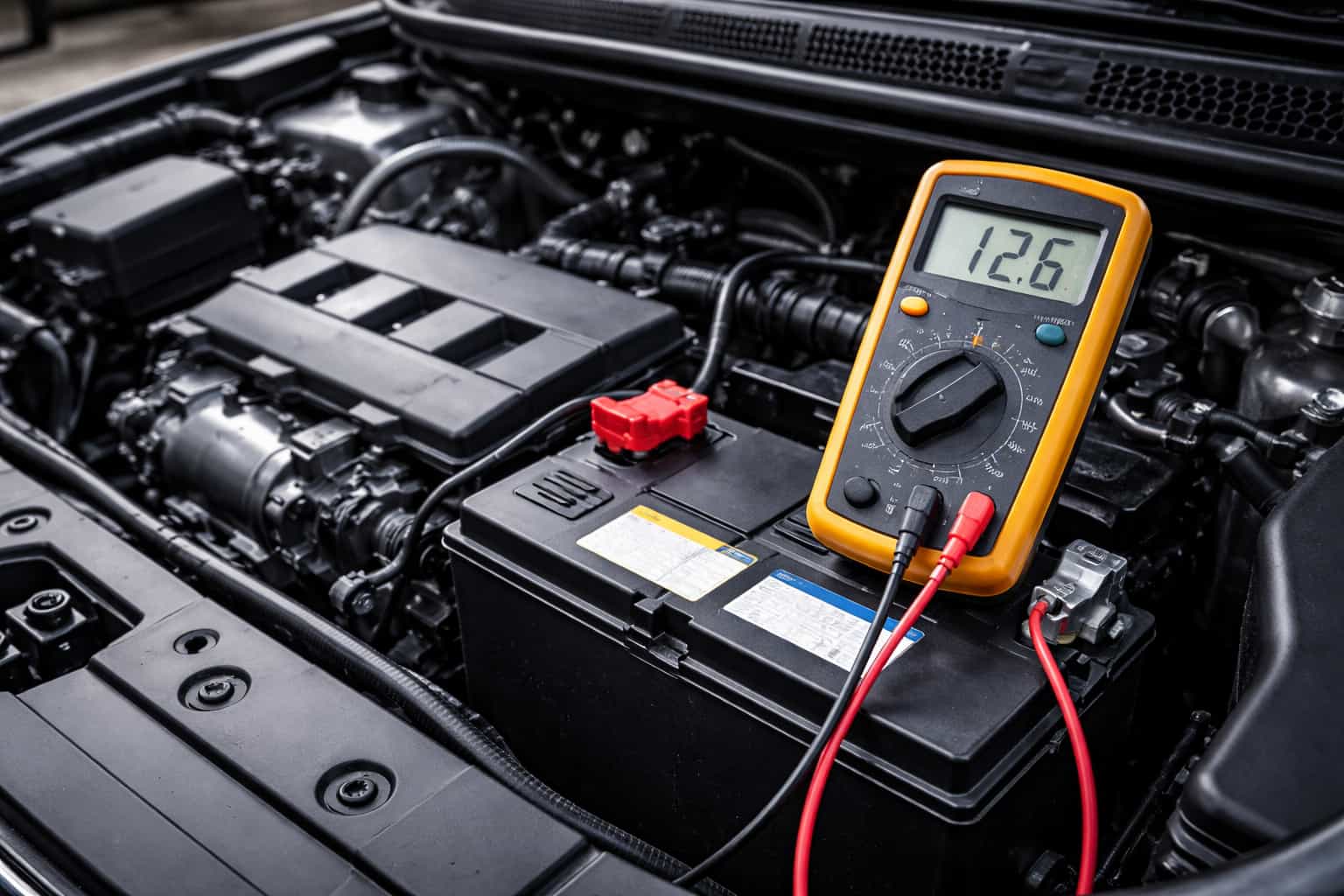
How to Test Car Voltage at Home
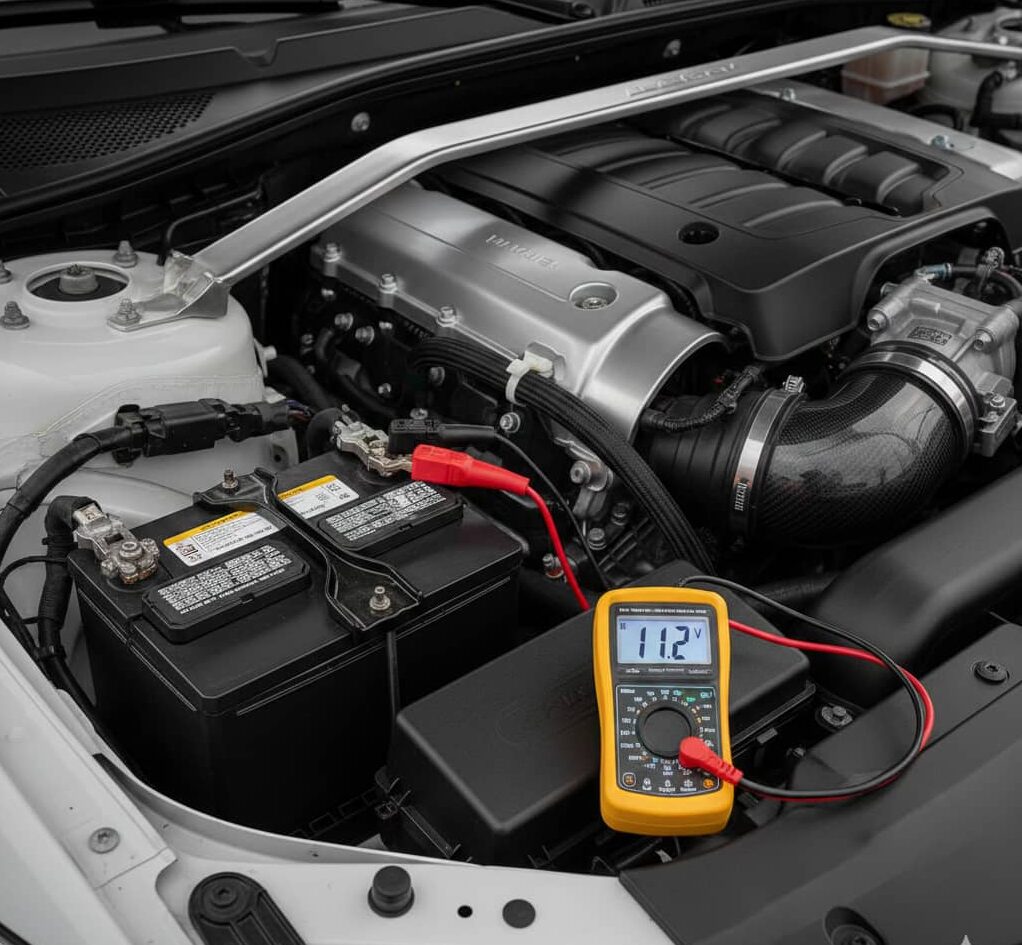
Method 1: Using a Digital Multimeter
Turn off the engine
Set multimeter to DC voltage
Place red probe on positive terminal
Place black probe on negative terminal
Read the voltage
Method 2: Free Testing in the US
Many auto parts stores offer free battery and charging system tests:
AutoZone
Advance Auto Parts
O’Reilly Auto Parts
Testing your car battery voltage regularly prevents unexpected failures.
Ideal Car Voltage Chart (Quick Reference)
| Condition | Voltage |
|---|---|
| Fully charged battery | 12.6 – 12.8V |
| Normal battery | 12.4 – 12.6V |
| Minimum to start | 12.2V |
| Engine running | 13.7 – 14.7V |
| Dangerous | Above 15V |
How Weather Affects Car Voltage
Cold Weather
Battery capacity drops
Higher starting voltage required
More frequent starting issues
Hot Weather
Battery fluid evaporation
Increased risk of overcharging
Shortened battery lifespan
Extreme US climates make regular voltage checks essential.
Car Voltage in Modern Vehicles
Modern vehicles rely heavily on stable car voltage to operate:
Engine control units (ECUs)
Advanced driver assistance systems (ADAS)
Infotainment screens
Emissions systems
Even minor voltage fluctuations can trigger warning lights or error codes.
How Long Does a Car Battery Maintain Normal Voltage?
Average car battery lifespan in the US:
3 to 5 years
Factors affecting lifespan:
Driving frequency
Climate
Electrical load
Maintenance habits
As batteries age, maintaining normal car battery voltage becomes difficult.
How to Maintain Proper Car Voltage (Expert Tips)
According to ASE-certified technicians, you should:
Drive your vehicle regularly
Keep battery terminals clean
Avoid excessive accessory use when engine is off
Check alternator belt condition
Test battery voltage at least once a year
Proper maintenance ensures stable automotive battery voltage.
Is Jump-Starting Safe for Car Voltage?
Jump-starting is safe when done correctly.
Safety Tips
Connect cables in correct order
Avoid touching clamps together
Let the dead battery charge for several minutes
Disconnect cables carefully
Incorrect jump-starting can cause dangerous voltage spikes.
Common Myths About Car Voltage
Myth: A car battery always produces 12 volts
Truth: Voltage varies based on charge and load
Myth: Higher voltage is always better
Truth: Excess voltage damages electronics
When Should You Replace Your Car Battery?
Replace your battery if:
Voltage stays below 12.0 volts
You need frequent jump-starts
Battery age exceeds 4 years
Physical damage or leaks appear
A failing battery cannot maintain normal car voltage.
Frequently Asked Questions (FAQs)
What is normal car battery voltage?
12.4–12.8 volts with the engine off.
How many volts is a car battery when running?
Between 13.7 and 14.7 volts.
Can low car voltage damage electronics?
Yes, it can affect sensors, ECUs, and infotainment systems.
Is 14.5 volts normal while driving?
Yes, that is within the normal alternator charging range.
Final Thoughts: Why Understanding Car Voltage Matters
Understanding car voltage empowers you to:
Diagnose problems early
Avoid breakdowns
Save money on repairs
Keep your vehicle safe and reliable
Whether you drive daily or occasionally, monitoring car battery voltage is one of the simplest and most effective ways to protect your vehicle.


 Rameez Aslam