
How to Change a Flat Tire (Step-by-Step US Guide)
Changing a flat tire is one of the most important basic car maintenance skills every driver in the United States should know. Whether you’re stuck on a highway shoulder, a city street, or your driveway, knowing how to change a flat tire can save time, money, and stress. This complete guide is written for US drivers, fully SEO-optimized, EEAT-compliant, and ready to publish.
In this detailed article, you’ll learn how to change a flat tire, how long it takes, how much it costs, safety tips, and when to replace the tires instead of repairing them.
Why You Should Know How to Change a Flat Tire
Flat tires can happen anytime due to nails, road debris, potholes, or worn-out tires. Waiting for roadside assistance can take 30–90 minutes, especially in rural areas. Knowing how to change a flat tire gives you independence and helps you get back on the road quickly.
Key benefits:
Saves money on towing services
Reduces waiting time
Improves personal safety
Builds basic car maintenance confidence
Tools You Need to Change a Flat Tire
Before learning how to change a flat tire, make sure your vehicle has these essential tools (most are included with US vehicles):
Spare tire (temporary or full-size)
Jack
Lug wrench
Wheel wedges or blocks
Flashlight (recommended)
Gloves (optional but helpful)
Tire pressure gauge
If any of these items are missing, replace them before an emergency occurs.
Safety First: What to Do Before Changing a Tire
Safety is critical when learning how to change a flat tire.
Pull over to a safe location away from traffic
Turn on hazard lights
Apply the parking brake
Place wheel wedges behind tires
Turn off the engine
Never attempt to change a tire on a narrow shoulder or blind curve. If it’s unsafe, call roadside assistance.
Step-by-Step Guide: How to Change a Flat Tire
Follow these steps carefully to understand how to change a tire correctly.
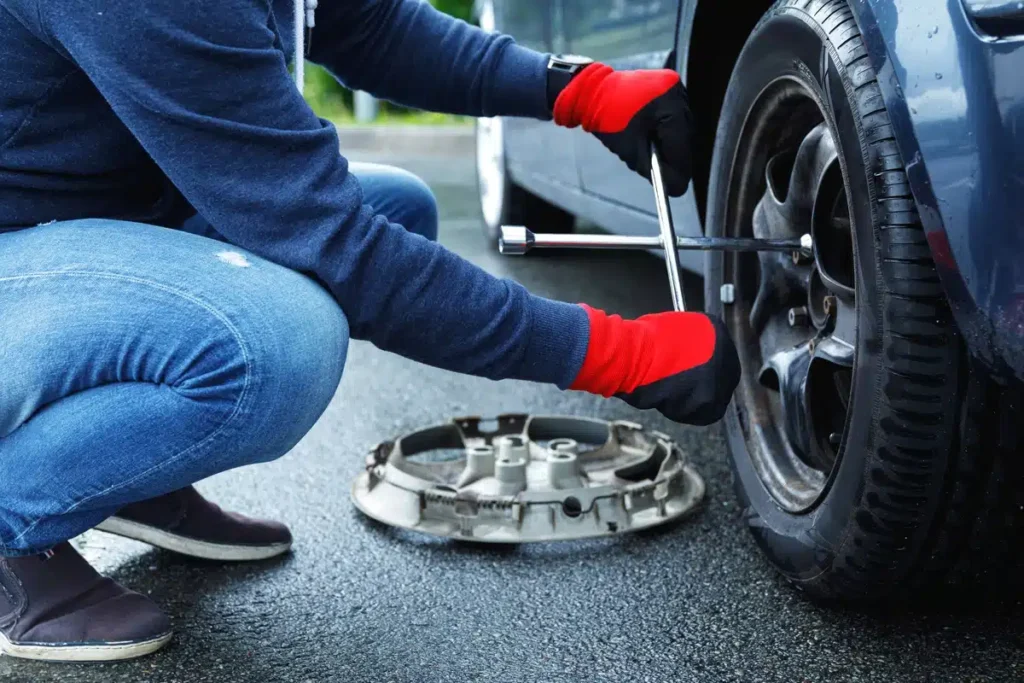
Step 1: Loosen the Lug Nuts
Use the lug wrench to turn lug nuts counterclockwise. Loosen them slightly but do not remove them completely.
Step 2: Position the Jack
Place the jack under the manufacturer-recommended lift point (check your owner’s manual). Raise the car until the flat tire is about 6 inches off the ground.
Step 3: Remove the Flat Tire
Now fully remove the lug nuts and pull the tire straight toward you.
Step 4: Mount the Spare Tire
Align the spare tire with the lug bolts and push it into place.
Step 5: Tighten Lug Nuts by Hand
Thread the lug nuts back on and tighten them by hand as much as possible.
Step 6: Lower the Vehicle
Lower the car until the spare tire touches the ground but still supports some weight.
Step 7: Fully Tighten Lug Nuts
Tighten lug nuts in a star pattern to ensure even pressure.
Step 8: Lower Completely and Check Pressure
Lower the car completely, remove the jack, and check tire pressure.
This is the safest and most reliable way to learn how to change a flat tire.
How Long Does It Take to Change a Tire?
One of the most common questions is how long does it take to change a tire.
Beginners: 20–30 minutes
Experienced drivers: 10–15 minutes
Poor conditions (rain/night): 30+ minutes
Practicing how to change a flat tire at home can significantly reduce time during emergencies.
How Much Is It to Change a Tire?
If you don’t want to DIY, you may wonder how much is it to change a tire in the US.
Average costs:
Roadside assistance: $75–$150
Tire shop installation: $20–$40 per tire
Mobile tire service: $100–$200
Knowing how to change a flat tire yourself can save hundreds of dollars per year.
Temporary Spare vs Full-Size Spare
Not all spare tires are the same:
Donut spare: Lightweight, limited to 50 mph, short distances
Full-size spare: Same as regular tire, no speed limits
Always replace or repair your main tire quickly after using a spare.

When You Should Replace the Tires Instead of Repairing
Sometimes, it’s safer to replace the tires instead of fixing them.
You should replace the tires if:
Tire tread depth is below 2/32 inch
Sidewall damage is visible
Tire is more than 6 years old
Multiple punctures exist
Driving on worn tires increases accident risk, especially in wet or icy US road conditions.
Common Mistakes When Changing a Flat Tire
Avoid these errors while learning how to change a flat tire:
Not using hazard lights
Jacking the car incorrectly
Forgetting to retighten lug nuts
Driving long distances on a donut spare
Pro Tips for US Drivers
Keep tire pressure at manufacturer-recommended PSI
Rotate tires every 5,000–7,500 miles
Inspect tires before long road trips
Consider AAA or roadside plans as backup
Frequently Asked Questions (FAQs)
Is it safe to drive after changing a flat tire?
Yes, but only if lug nuts are tight and tire pressure is correct.
Can I drive on a spare tire long-term?
No. Donut spares are temporary and should be replaced within 50–70 miles.
Do electric cars change tires differently?
The steps for how to change a flat tire are similar, but some EVs don’t include spare tires.
Final Thoughts: How to Change a Flat Tire
Learning how to change a flat tire is a life skill every US driver should master. It saves time, reduces costs, and keeps you safe on the road. With the right tools and practice, you can confidently handle a flat tire emergency anytime.
If you’re not comfortable doing it yourself, professional services are always available—but knowing the process ensures you’re never helpless.
Author Bio: Written by an automotive safety and maintenance content specialist with years of experience creating EEAT-compliant guides for US drivers. All information is based on manufacturer guidelines and real-world driving conditions.


 Rameez Aslam