How to Check Engine Oil: A Complete Step-by-Step Guide for Every Car Owner
Checking your engine oil is one of the simplest yet most important car maintenance tasks. Unfortunately, many drivers either ignore it or do it incorrectly. Knowing how to check engine oil the right way can help prevent engine damage, improve fuel efficiency, and extend the life of your vehicle.
In this detailed guide, you’ll learn how to check engine oil, whether you should check oil hot or cold, when to check engine oil, common mistakes to avoid, and how to understand oil condition like a pro — even if you’ve never opened your hood before.
This article is written for everyday drivers in the United States and applies to most gasoline and diesel vehicles.
Why Checking Engine Oil Is So Important
Engine oil plays a critical role in keeping your car healthy. It lubricates moving parts, reduces friction, controls temperature, and prevents metal components from wearing out.
If your oil level is too low or the oil is dirty, your engine may suffer from:
Overheating
Poor performance
Reduced fuel economy
Costly engine repairs
Complete engine failure
Learning how to check engine oil regularly helps you catch problems early before they turn into expensive repairs.
How Often Should You Check Engine Oil?
One of the most common questions drivers ask is when to check oil.
General Recommendation
Check your engine oil at least once a month
Always check before long road trips
Check more often if your car is older or has high mileage
Even modern cars can burn oil slowly, so regular checks are still essential.
When to Check Engine Oil: Hot or Cold?
This is one of the biggest points of confusion.
Check Oil Hot or Cold?
Short answer:
👉 Warm engine, but turned off for 5–10 minutes
Why This Matters
When the engine is running, oil circulates through the system
Turning the engine off allows oil to drain back into the oil pan
Waiting a few minutes gives you the most accurate reading
Best Practice
Drive your car for a few minutes
Turn off the engine
Wait 5–10 minutes
Then check the oil
So if you’re wondering check engine oil hot or cold, the correct answer is: warm, not running.
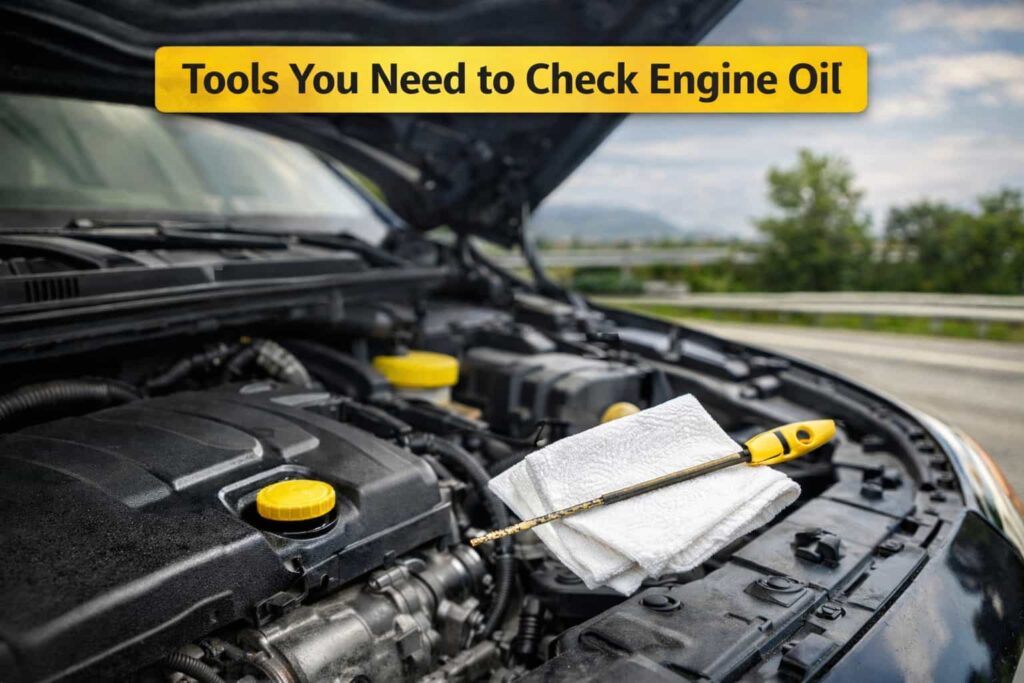
Tools You Need to Check Engine Oil
Good news — you don’t need expensive tools.
You only need:
A clean cloth or paper towel
Your car’s dipstick
That’s it.
Step-by-Step Guide: How to Check Engine Oil
Let’s get into the exact process of how to check engine oil correctly.
Step 1: Park on a Level Surface
Always park your car on flat ground. Slopes can give false oil readings.
Step 2: Turn Off the Engine
Make sure the engine is off and has cooled slightly (5–10 minutes).
Step 3: Open the Hood
Pull the hood release lever inside your car and secure the hood properly.
Step 4: Locate the Dipstick
Usually has a yellow, orange, or red handle
Marked with an oil symbol
If you’re unsure, check your owner’s manual.
Step 5: Remove and Clean the Dipstick
Pull the dipstick out and wipe it clean with a cloth or paper towel.
Step 6: Reinsert the Dipstick Fully
Push it all the way back in to get an accurate reading.
Step 7: Pull It Out Again and Check the Level
Look at the oil level between the MIN and MAX marks.
This is the most important step in learning how to check oil correctly.
Understanding the Oil Level Reading
What the Marks Mean
Below MIN: Oil level is too low (add oil immediately)
Between MIN and MAX: Oil level is normal
Above MAX: Too much oil (can damage the engine)
Never overfill your engine.
How to Check Engine Oil Condition (Not Just Level)
Checking oil isn’t just about quantity — quality matters too.
Oil Color Guide
Amber or light brown: Healthy oil
Dark brown or black: Old oil (may need change)
Milky or foamy: Possible coolant leak (serious issue)
Oil Texture
Rub a drop between your fingers:
Smooth = good
Gritty = contaminated
Knowing how to check engine oil properly means checking both level and condition.
Check Engine Oil Hot or Cold: Final Answer
Let’s clear this once and for all.
Cold engine: Oil may not reflect true operating level
Hot engine (running): Unsafe and inaccurate
Warm engine (off for 5–10 min): ✅ Best method
So when people ask check oil hot or cold, the safest and most accurate option is warm and turned off.
When to Check Oil in Different Situations
New Car
Once a month is usually enough
Older Car
Every 2–3 weeks
Before long trips
High Mileage Vehicles
Weekly checks recommended
Understanding when to check engine oil depends on your car’s age and condition.
Common Mistakes to Avoid When Checking Engine Oil
Even people who know how to check engine oil make mistakes.
Avoid these:
Checking oil on uneven ground
Not wiping the dipstick first
Overfilling the engine
Checking immediately after turning off a hot engine
Ignoring oil color and smell
How to Add Oil If the Level Is Low
If your oil is below the MIN mark:
Open the oil filler cap
Add oil slowly (small amounts)
Wait a minute
Recheck the oil level
Always use the oil type recommended by your manufacturer.
How Often Should You Change Engine Oil?
Checking oil doesn’t replace oil changes.
Typical oil change intervals:
Conventional oil: Every 3,000–5,000 miles
Synthetic oil: Every 7,500–10,000 miles
Regular checks help you know if your car is consuming oil faster than normal.
Dashboard Oil Light vs Manual Oil Check
Never rely only on the oil warning light.
Oil light = pressure issue (already dangerous)
Dipstick = early detection
Manual checking is always safer.
Can You Check Engine Oil Without a Dipstick?
Some modern cars have electronic oil monitoring systems.
If your car doesn’t have a dipstick:
Check oil level through the dashboard menu
Follow manufacturer instructions carefully
Still, learning how to check engine oil manually remains valuable knowledge.
Frequently Asked Questions
How often should beginners check engine oil?
Once a month is perfect for most drivers.
Can low oil damage the engine?
Yes. Even short drives with low oil can cause permanent damage.
Is dark oil always bad?
Not always, but very dark or thick oil usually means it’s time for a change.
Final Thoughts: Why Every Driver Should Know How to Check Engine Oil
Learning how to check engine oil is one of the easiest ways to protect your car and save money. It takes less than five minutes and can prevent thousands of dollars in repairs.
By understanding when to check oil, whether to check engine oil hot or cold, and how to read oil condition correctly, you become a smarter and more confident car owner.
Make it a habit — your engine will thank you.


 Rameez Aslam